
The Sauk County Arrest Log
Sauk County publishes no multi-day booking blotter from the Sheriff. The best substitute is Reedsburg's Daily Call Log, a set of rolling PDFs named by date. It logs calls, not countywide bookings. Each entry lists the date, incident report number, a short description, street, city, and officer. You will not find booking numbers or booking photos there. Names are missing too. Reedsburg's Police Media Releases archive reaches back further. Selected OWI, drug, weapons, theft, and disturbance incidents appear alongside non-arrest notices. A release may mention a transport to Sauk County Jail. The archive is irregular, though. Baraboo and Wisconsin Dells offer nothing similar online.
A call log can still point to an arrest. Read it as a clue. Then confirm the custody record with the agency itself.
How to Read Sauk County Blotter Sources
Start with the agency, not a private directory. Open the official Reedsburg Daily Call Log index. Compare the incident date with the PDF's posting date. Older events often surface after a weekend, holiday, or review delay. The Police Media Releases index comes next. There, an arrest narrative sits mixed with fire and traffic notices, so sort them carefully.
- Check the date-named Daily Call Log files for the event period.
- Read the disposition and description, but do not treat “Arrest” as a complete booking record.
- Search Reedsburg Media Releases for a matching narrative and transport statement.
- For Baraboo or Wisconsin Dells, contact the originating police records unit because no public blotter was verified.
- Use the same-day arrest page only for its distinct absence finding, then ask the jail or custodian for current confirmation.
Need something on one person? The county's records hub routes the request by custody stage. It points to the Sheriff, city police, courts, DOC, ICE, or BOP.
What a Reedsburg Log Entry Shows
The Reedsburg log earns its place through consistency. Its fields stay the same even though the scope is narrow. Just remember the columns describe a call or report, not always the person arrested.
| Published field | How to interpret it |
|---|---|
| Date | Event date; compare it with the PDF print date. |
| Incident report number | Agency identifier for the call or report. |
| Description | Short operational description, not a charging document. |
| Street and city | Location context, not proof of residence or guilt. |
| Officer | Officer or unit associated with the incident. |
| Disposition | Administrative outcome such as “Arrest,” not the court disposition. |
| Photo | No booking-photo field or public photo policy is established. |
The official city index holds every rolling file. Open the Reedsburg Daily Call Log index to browse the dated PDFs.
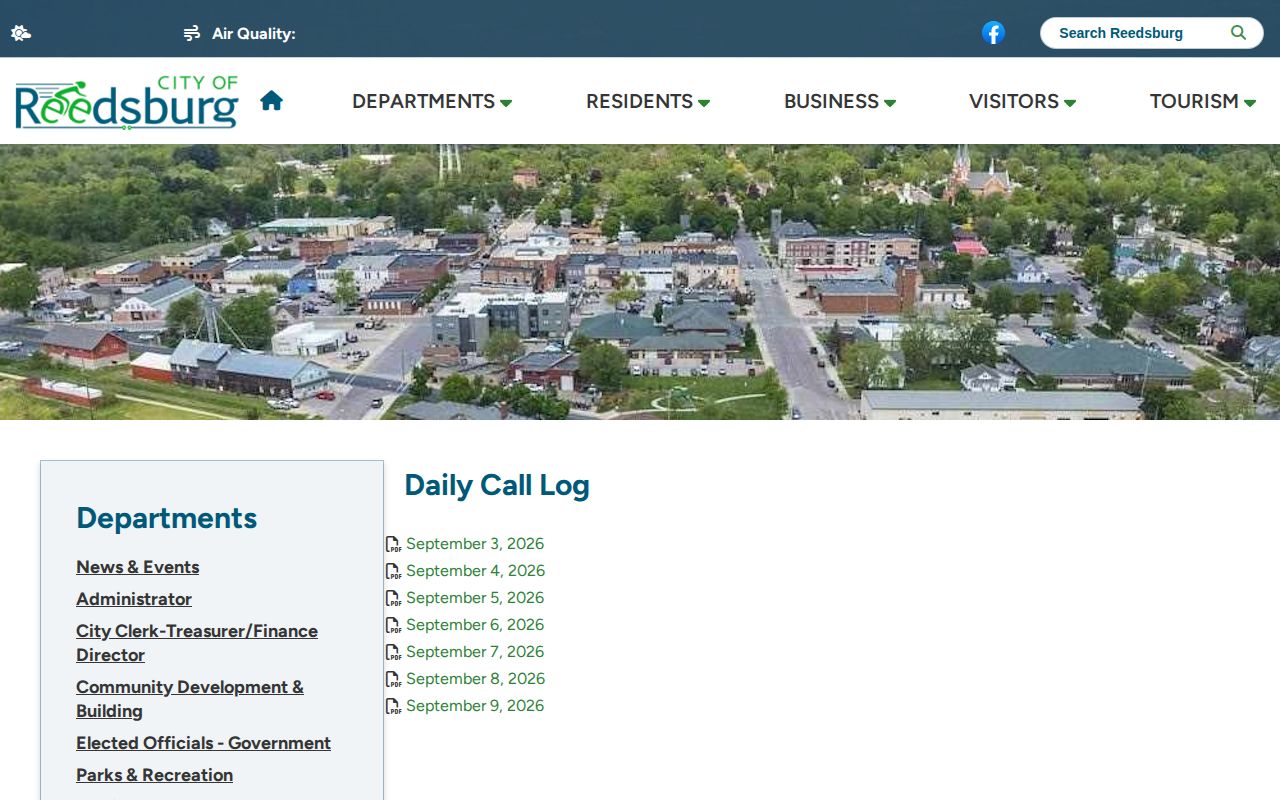
The page proves the point quickly: it is a call log, not a named booking feed.
Weekend and Holiday Arrest Posting
No weekend posting rule exists for Sauk County. The Sheriff runs no blotter at all. Reedsburg's PDFs are operational files, not a promised seven-day product. A weekend surge may generate more incidents, yet a selective release archive cannot measure that. A PDF may lag its event date. A media release may sit under review. Missing from both indexes does not mean no arrest happened. Call the jail for current custody. Ask the arresting agency about the incident. Save the search date and source if the matter is urgent. Never infer a release or dismissal from an old disposition. Reedsburg Media Releases remain the clearest local narrative channel.
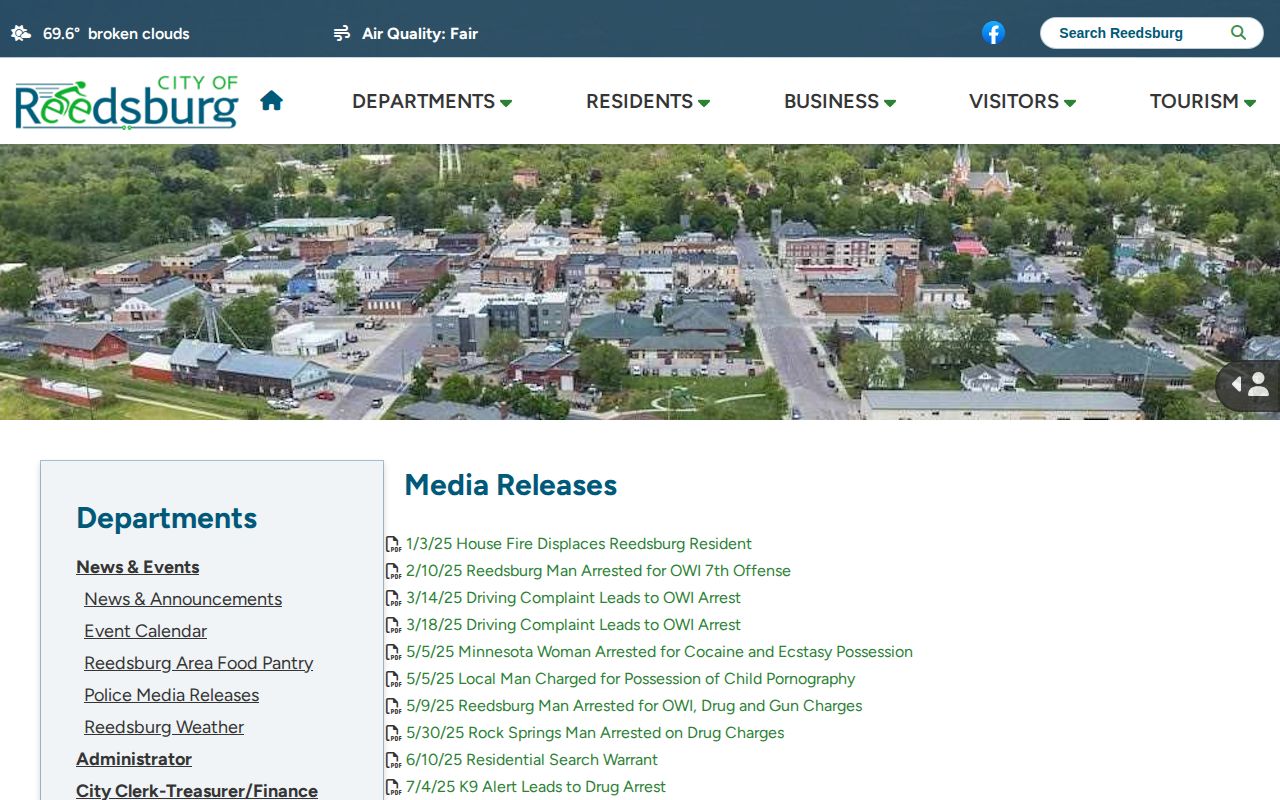
The archive can document a transport to Sauk County Jail, but it stays incomplete.
News Blotters and Arrest Context
Local news adds context around arrests. Baraboo News Republic and WiscNews cover community crime stories. WRCO and Civic Media run event-driven radio reports. These outlets often credit the Sheriff or city police, but coverage is editorial. Article photos may show a scene, an officer, or the courthouse. No current mugshot gallery exists among them. Follow the official release instead, and never treat a news image as an intake photo. Mugshots.com keeps a private Sauk County section. It skews historical and stale. It should never outrank the Sheriff, a records custodian, WCCA, or VINE.
Archives and Retention
The Daily Call Log is a rolling index, not a permanent archive. Once a PDF rolls off, request the underlying report from Reedsburg Police. Sauk's legacy records code sets its retention terms. Booking sheets are permanent. Arrest records last eight years. Incident records last ten. The schedule looks dated, so confirm with the current custodian. A dead web link never proves a record was destroyed or expunged. Sheriff-held records go through the open-records form at 1300 Lange Court, Baraboo, or fax 608-355-3298. Reedsburg's police form lists 200 South Park Street, 608-524-2376, fax 608-524-2925, and records.com. Ask for the incident report, booking sheet, and any photograph as separate items. The Reedsburg form estimates seven to ten business days for a response. That estimate is subject to change.
Keep a copy of the date, URL, and report number. Retention rules and online visibility run on different clocks.
Reading a Multi-Day Record Carefully
A multi-day log answers a different question than a same-day custody check. Reedsburg's call file works this way. An incident can appear days later. It may be tagged with an arrest disposition but no name attached. Media releases fill in story detail. They pick and choose what to cover. Match the event date against the posting date. Then weigh the agency and the disposition before you trust any one line in Sauk County records.
What if the log ends where you need it? Ask the agency about its retention schedule and archive path. A rolling index dropping off the screen does not mean the report itself is gone. Sauk's published schedule offers a starting point. But the records custodian confirms the rule that currently applies.
Separating Incidents from Bookings
Use a multi-day log to find the event, not the booking. That distinction matters in Reedsburg. The description, location, officer, and disposition fields are operational data, not a custody answer. For a person-specific record, go to the police department or the jail directly. A news story might tip you off to a release. Yet the official custodian still holds the booking sheet or photo the log never shows.
Short log entries leave gaps. WCCA and a records request close the chain from arrest to charge. Charges can shift. A case can be declined. A disposition may land much later, so compare every source before you settle on what happened.